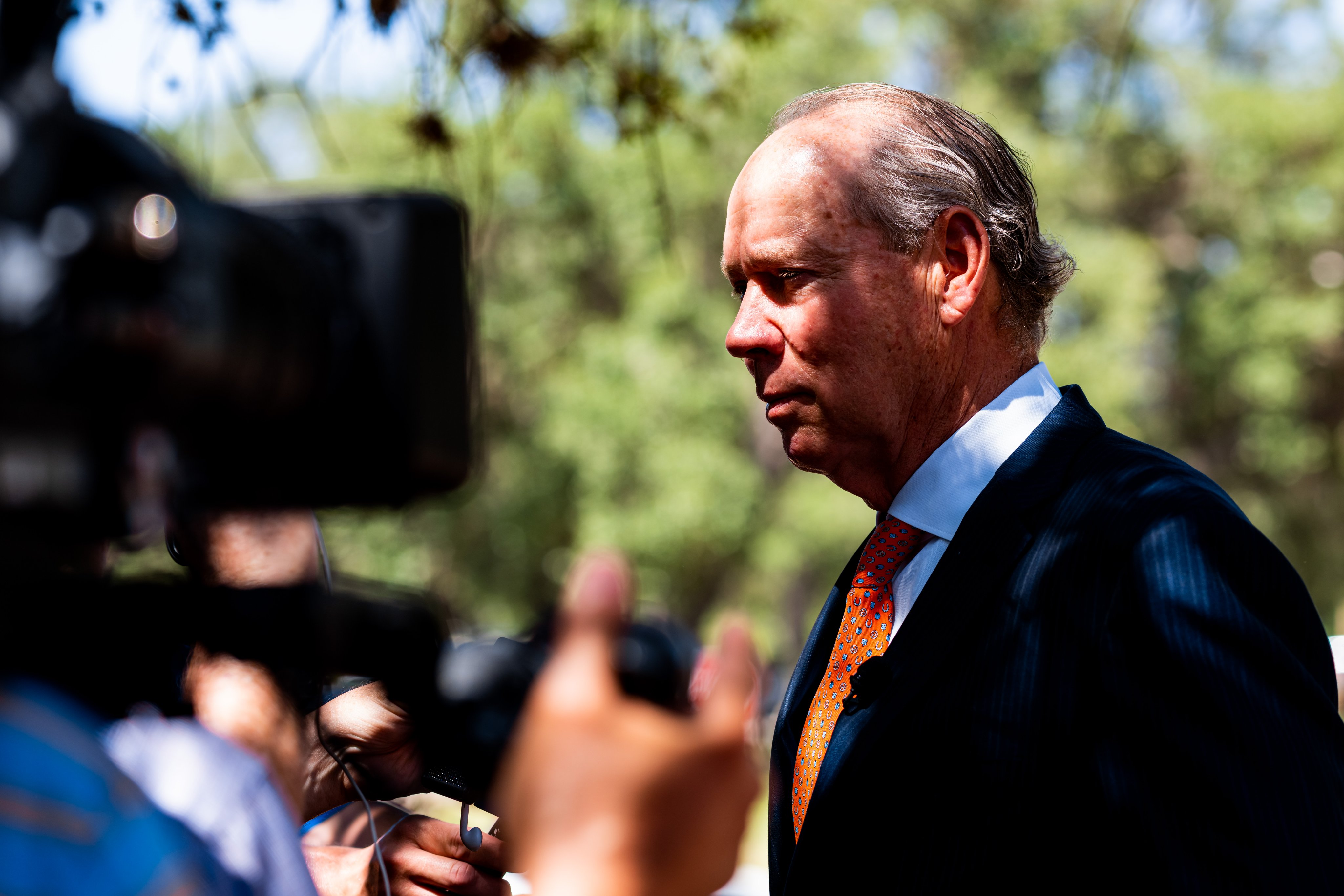
The Astros and GM Dana Brown parted ways. What does this mean for the organization? The contours of the search for a new GM are not clear. But I have a modest suggestion: the Astros should return to their roots as a cutting edge innovator and adopter of analytics.
The roots I’m talking about: the Jeff Luhnow era which resulted in seven playoff appearances over eight years. Luhnow encouraged cutting edge statistical analysis and taking risks based on what the numbers said. The approach was controversial at the time, and Luhnow drew resentment from the traditional baseball world. But within a matter of a few years, the majority of organizations were adopting analytic methods pioneered or pursued by the Astros’ organization.
Analytics led to a massive change in how baseball players and baseball teams are evaluated. Michael Lewis wrote about the influence of sabermetrics on baseball in Moneyball. But his later book, The Undoing: A Friendship That Changed Our Minds, about the academics who won a Nobel Prize for behavioral economics contains a chapter on Daryl Morey, the Rockets GM doing much the same thing as Luhnow, but in the basketball world. (Slate Magazine reprinted the Morey chapter here.) His book addresses the shift caused by analytics:
It was curious, when you thought about it, that such a putatively competitive market as a market for highly paid athletes could be so inefficient in the first place. It was strange that when people bothered to measure what happened on the court, they had measured the wrong things so happily for so long. It was bizarre that it was even possible for a total outsider to walk into the game with an entirely new approach to valuing basketball players and see his approach adopted by much of the industry.
When the Astros showed success with analytics, other teams were quick to emulate Luhnow’s approach. Over the last 10 years or so, analytics grew in influence throughout baseball. But it seems like, over time, the Astros may have fallen behind the curve. Some of this is natural, as top analysts leave or are hired by other organizations. It feels like the Astros are no longer on the forefront of developing analytic methods and tools. GM James Click seemed to try and carry forward Luhnow’s systems. But after Click”s departure, though the Astros continued to employ analytics, it did not seem to have the same priority as it did in Luhnow’s tenure. Arguably, the hiring of super-scout Dana Brown as GM was somewhat like a step back from the analytics focus. I don’t say this to be negative about Brown. He did some good things with the farm system. I suspect that future GMs will be thankful for Brown’s 2025 and 2026 drafts much like Luhnow was thankful that his predecessor, Ed Wade, drafted George Springer. But analytics were not in Brown’s wheelhouse, which was scouting.
This season has been a struggle for the Astros due primarily to poor starting pitching. Modern pitching development is highly dependent on analytics. I’ve written several articles about the impact of the ABS strike zone this season on the Astros’ pitching difficulties and opposing teams’ hitting tendencies. One has to wonder if this reflects a “miss” by the Astros’ pitching analytics.
You are probably aware of the Stuff+ metric, which measures the quality of pitchers’ stuff based purely on movement, velocity, and location. The Astros have experienced a decline in the starting pitchers’ stuff since 2022.
| Year | Astros MLB Rank Stuff+ for Rotation |
|---|---|
| 2022 | 2nd (MIL 1st) |
| 2023 | 15th (TBR 1st) |
| 2024 | 3rd (SEA 1st) |
| 2025 | 22nd (PHI 1st) |
| 2026 | 25th (LAD 1st) |
It’s true that this reflects the impact of injuries and declining output from the farm system. But it also measures the types of pitch characteristics that pitching analytics groups review in the pursuit of individual pitchers’ improvement. Moreover, the job of the GM is to draft pitchers with pitching talent and acquire new pitchers each year to provide a quality rotation with adequate depth.
Presumably pitching analytics should be a key input the process of drafting and acquiring pitchers. This is one reason why I would argue that the new GM should show a commitment to not only using analytics, but also striving for the cutting edge in analytics.
What should NOT happen is for the Astros to step even further away from the commitment to analytics. I saw a recent article which advocated making former player Jeff Bagwell as GM. I have seen no indication that Bagwell, currently a special assistant to owner Jim Crane, wants to be GM, and perhaps that article was simply trolling the internet. But that would be a very bad sign for the organization. I liked Bagwell the Hall of Famer, and I don’t doubt that he has baseball knowledge which can be put to good use by the Astros. But as fans we have listened to Bagwell’s thoughts and insights for many years. Jeff has skepticism of using analytics in baseball–which (to be fair) is not unusual for ex-players of his age. But that kind of move would put the Astros at a disadvantage vs. other organizations which use analytics to construct and operate their team. The San Francisco Giants recently hired future Hall of Famer Buster Posey as president of their baseball operations. And the results so far are consistent with my expectation that it is a disastrous move. The Colorado Rockies resisted analytics for many years (up until the hiring of a sabermetric GM this year), and we saw how that put the Rockies on a perennial last place path.
On the TLA Discord, I’ve stated that my personal preference for Astros’ General Manager is Sig Mejdal, currently the Assistant GM for the Baltimore Orioles. I have no idea if he would be interested, nor do I know whether the Astros are interested. But he would be a link to the analytics emphasis of the Luhnow era. Mejdal started the first analytics group for the St. Louis Cardinals and Luhnow brought Mejdal with him when Crane named Jeff General Manager. Mejdal was director of decision science and pushed cutting edge analytical solutions. A former aerospace engineer for NASA, professional black jack dealer, and master of fantasy baseball in its early days, Mejdal brings an outside the box mindset. Given the difficult problems facing the Astros’ next GM, I suspect that he might bring the creative strategies that are necessary for the organization to prevail.
I mention Mejdal not because I have any particular influence over the GM decision, but rather as an example of the type of person I would be looking to hire. Strong comittment to analytics and creativity in problem solving are high on my list.
Crane has mentioned the Brewers, Guardians, and Rays as organizations with successful front offices. And that’s a good sign that Crane may be thinking about the right things. Each of those organizations has a reputation for successfully implementing analytics in their decision making. I have been impressed that each of those teams develop plans for constructing a winning team and successfully execute their plans. A new GM will need to develop a culture of success, and those teams provide a template for doing so.
No matter what principles a new GM brings to the Astros, nothing guarantees success. But analytics allows the team to increase the odds of success. It’s a game of trying to build an advantage over other teams, all of which are trying to seek their own analytic advantage. I’ll finish up with this quote from Michael Lewis about Daryl Morey’s efforts (see Slate link above).
And yet even Leslie Alexander, the only owner with both the inclination and the nerve to hire someone like him back in 2006, could grow frustrated with Daryl Morey’s probabilistic view of the world. “He will want certainty from me, and I have to tell him it ain’t coming,” said Morey. He’d set out to be a card counter at a casino blackjack table, but he could live the analogy only up to a point. Like a card counter, he was playing a game of chance. Like a card counter, he’d tilted the odds of that game slightly in his favor. Unlike a card counter—but a lot like someone making a life decision—he was allowed to play only a few hands. He drafted a few players a year. In a few hands, anything could happen, even with the odds in his favor.
Feature photo from @astros on X, Source Link.


































I guess it’s implicit, but I would mention it anyway. The new GM has to rebuild the organization from the ground up. We are not drafting well or developing players at a good clip. Everybody in the organization has to be on board with analytics. We can’t have a Click in the front office and a Dusty in the field. Or share the FO with Bagwell, Biggio, and Jackson. You do, or you don’t. Scouting has to be a harmonious blend of baseball and analytics guys. Everybody has to speak more than one language. We can’t have Bagwell looking at the back of the baseball cards, and the GM developing new algorithms, and then bring them together to make important decisions.
Good points.
Solid post, solid logic behind it.
I’d say analytics are no longer a matter of gaining an advantage over other teams (as they were in the Luhnow period). They’re now needed just to COMPETE with other teams using them extensively. I’m skeptical the Astros can do that as long as Bagwell wields front-office influence. Crane seems undeterred by the Abreu and Montero fiascos and disinclined to return to what created the Golden Era. I suspect that’s not so much a rejection of analytics as it is an unwillingness to give any new GM the authority and autonomy he gave Luhnow.
As for Mejdal, what went wrong with the Orioles? They were rising fast, but seemed to plateau and even decline. Maybe it’s a temporary thing with them (remember the 2016 Astros), but it’s puzzling.
Just to add another possibility. Crane may feel he loses control of the team if it goes all analytics. That is a sorry excuse, of course. You can learn, understand, and become fluent in analytics if you want to. You don’t have to be a doctor to run a hospital.
Crane had Nolan during the Luhnow years. I remember there being much consternation about that when he came aboard but Crane figured out a way to make it work.
I don’t think Bagwell is going anywhere, and even if he did I think Crane would replace him with another former player, but hopefully with a new analytically focused GM that Crane buys into he can move back to a a more informal, advisory role.
I’m cautiously optimistic. I know we are all worried about Bagwell and his influence. But Crane is also a successful business man, I imagine he has made decisions in the best interest of his company over those who he is closest too in said company time and time again. The fact he named dropped a handful of deep analytical teams is a good sign, and if they did attempt to strike a balance, I wouldn’t be bothered by the Dodgers name we were connected to. Will Rhymes.
If it’s true that Bagwell was the one how wanted to bring back Strom, I’m a little optimistic. Strom is a great example of combining old school with analytics. Also, Crane is in logistics and logistics should be using analytics of some sort, unless he thinks it’s all about his brain.
Strom has both old school and new school connections. Strom previously had a stint as Astros’ pitching coach in the late 90’s (I’m thinking 1996, but I could be off by a year or two). Bagwell waa playing for the Astros then, which probably means that he knew Strom fairly well.