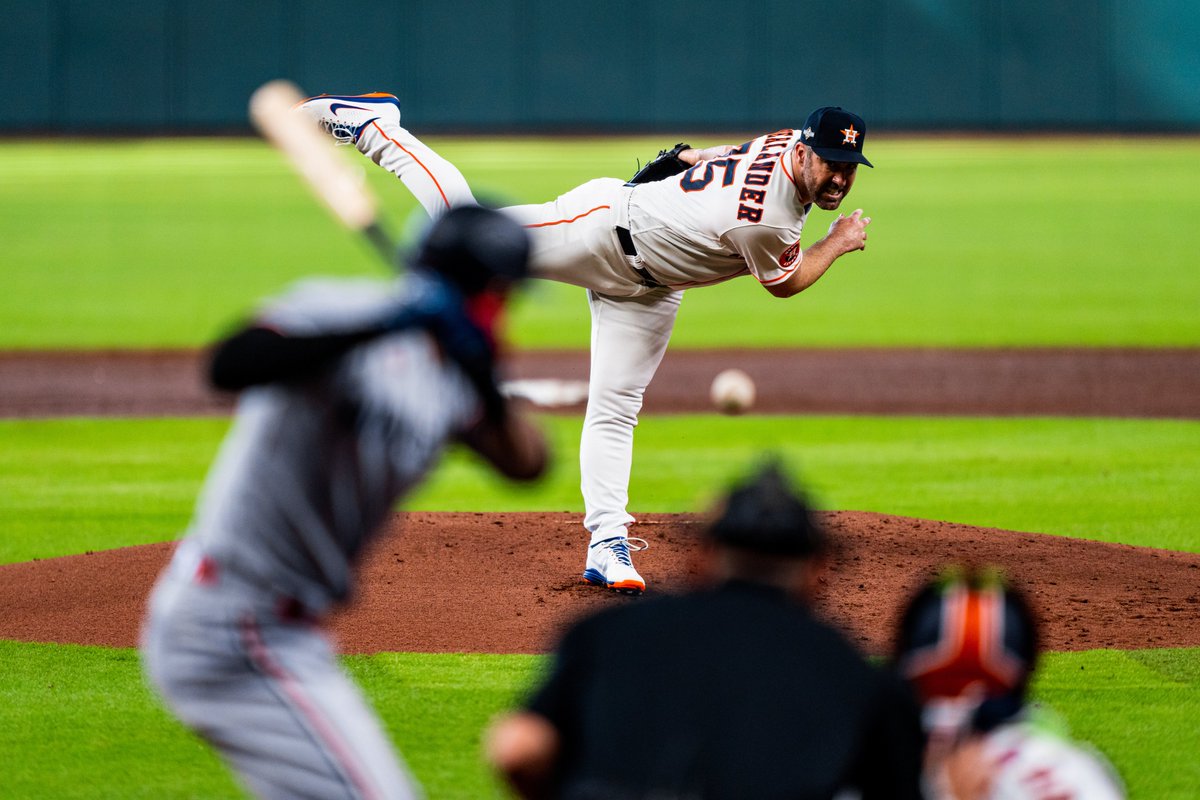
It has been a hot minute since we have done a conventional index piece. Normally, we would break players down by position, but when we get to hurlers we have to do so by era. The first era we are looking at are those that made their debuts after 2000 or spent the vast majority of their careers after 2000. That being said, we are always getting new readers, so we should start with the index and how it works.
The index is designed to measure fitness for Cooperstown. Period. It does not measure greatness. By design, it groups players together into like groups so we can use other means to compare them. When we look at this period, three pitchers rise above the rest and are fairly close together in index value. I must repeat, the results of the index do not reveal greatness. It reveals similarity.
With position players we would look at hitting, fielding, awards voting, and playoff performance. We do not need to break down hitting and fielding here, so we are just looking at their sabermetric pitching categories in addition to the playoff performance and awards voting. For fun, we will throw in the WAR season breakdowns we have included with the other positions in the last round.
Pitcher HOF Index
| BWAR | FWAR | BWAR10 | FWAR10 | Index | |
|---|---|---|---|---|---|
| Justin Verlander | 81.7 | 84.2 | 65.3 | 63.5 | 294.7 |
| Clayton Kershaw | 80.9 | 79.1 | 64.1 | 60.4 | 285.0 |
| Max Scherzer | 74.8 | 73.0 | 65.8 | 58.4 | 272.0 |
Some of you are new to the index. Essentially it combines baseball-reference.com WAR and Fangraphs.com WAR into two separate numbers. The first is the career value number. The second is the peak value number. Peak value is defined as the best ten seasons of a player’s career. It is similar to JAWS but differs because it uses two different sources instead of one and uses a ten year peak instead of a seven year peak.
I should point out that the original version of the index actually included three different sources. However, Bill James has retired and so win shares are no longer compiled. However, in the books we also included win shares divided by five. Any new publication of the index would not include win shares.
I have to reiterate what these numbers mean. It does not mean that Verlander was (or is) better than Kershaw. It means that he is slightly more fit for Cooperstown than Kershaw. Comparing the two would not be like comparing steak and chicken. It would be more akin to picking a T-Bone steak versus filet mignon. They are both steak. It just depends on your particular taste as to which one you prefer. We should look at the sabermetric pitching numbers to begin to parse this out.
Pitcher WAR seasons
| 5+ WAR | 4+ WAR | 3+ WAR | Total | |
|---|---|---|---|---|
| Justin Verlander | 9 | 3 | 1 | 13 |
| Clayton Kershaw | 8 | 1 | 4 | 13 |
| Max Scherzer | 9 | 1 | 2 | 12 |
Before we get to the pitching numbers, we are looking at WAR in a slightly different light. This is where we start to see a difference in preference. Some people prefer high end greatness. Others prefer consistency over time. Verlander has pitched in more seasons than the other two, so he had a lower percentage of high WAR seasons overall, but he has more volume of great seasons.
However, all three are very similar. This is what the index is designed to show. It is designed to put players into groups with other similar players. It becomes a bit of a logical statement. If this player is a Hall of Famer than the players he is similar to should also be Hall of Famers. In this case, we know all three are Hall of Famers. As we continue the trip through starting pitchers, we will see other pitchers they are historically similar to based on their index score.
Sabermetric Pitching Numbers
| ERA+ | BPO | waaPCT | NW | QS% | |
|---|---|---|---|---|---|
| Justin Verlander | 128 | 0.578 | 0.589 | 250 | 65 |
| Clayton Kershaw | 154 | 0.494 | 0.621 | 198 | 67 |
| Max Scherzer | 129 | 0.583 | 0.599 | 205 | 62 |
Most of these numbers are self-explanatory, but some deserve some extra mention. ERA+ normalizes ERA by comparing players’ ERA to the league average with a ball[ark adjustment included. 100 is average so anything above 100 is above average. Obviously, the higher the number the better. So, a Scherzer is 29 percent better than the league average.
Obviously, Kershaw laps the field here and that stat alone makes some inclined to pick him as the best pitcher of the era. We saw bases per out before with the hitters. Obviously, the lower the better for pitchers and Kershaw again looks really good here. Those numbers spit us into the weighted adjusted average winning percentage (waaPCT). It calculates what a pitcher’s winning percentage would be with average fielding and average hitting from his team.
That spills us into neutral wins. You simply take the total number of decisions a player has and multiply the waaPCT by it. No metric is perfect. It cannot parse out no decisions and whether they would have been no decisions with average offensive, fielding, and bullpen support. However, it is an independent measure of pitching durability.
Kershaw obviously looks better in terms of quality, but Verlander looks better in terms of longevity and durability. Scherzer seems to be a pretty obvious third choice according to these numbers. As you can see, the title of greatest pitcher is a subjective one. It depends on which numbers a fan chooses to value. Do you value high end greatness or long-term greatness?
Pitcher Cy Young points
| Vote | BWAR | Diff | CY | |
|---|---|---|---|---|
| Justin Verlander | 64 | 56 | 8 | 3 |
| Clayton Kershaw | 56 | 53 | 3 | 3 |
| Max Scherzer | 55 | 59 | −4 | 2 |
One way of measuring high end greatness is looking at Cy Young points. They work the same way as MVP points worked for position players. First place finishes are awarded ten points, top five finishes five points, top ten finishes three points, and top 25 finishes one point. We then do the same with BWAR points.
For the last category, we looked at the number of times the pitcher led the league in BWAR. As you can see, all three pitchers are very similar here. It drives home the point there is very little to separate these three pitchers. I would argue that Kershaw has the edge based on his ERA+, waaPCT, and BPO but Verlander has a compelling argument based on his longevity.
Of course, Scherzer ends up looking better here and this is why we include all of these tests. You can think of statistics like a work of art. When you include only the basic numbers it is like drawing stick figures. The more tests you end up including the more perspective you get and the more subtlety you can add. However, like most art, the beauty is in the eye of the beholder.
Our last test is the postseason test. I should warn everyone that I don’t put a whole lot of stock in the postseason test. As you can see by the numbers, you are looking at one season’s worth of numbers for all three players. It has value when you are trying to separate three very similar players, but we aren’t leapfrogging a Madison Bumgarner here based on some postseason heroics.
Pitcher Postseason Numbers
| W-L | INN | ERA | SO | |
|---|---|---|---|---|
| Justin Verlander | 17-12 | 226.0 | 3.58 | 244 |
| Clayton Kershaw | 13-13 | 196.2 | 4.62 | 213 |
| Max Scherzer | 8-8 | 157.1 | 3.78 | 182 |
Again, there are all kinds of issues with postseason numbers. The primary issue is that wins and losses are a function of a number of things. The quality of the team behind is involved, the quality of the opponent is involved, a ton of luck is involved as well. Even if we ignore the wins and losses we still have some of those variables involved in ERA. The smaller the sample size the more variance we get in terms of luck.
Some players (Scherzer clearly here) did not play on as many good teams as Verlander and Kershaw. Players should not be penalized for a lack of opportunity. This is why postseason performance is merely a tiebreaker in my mind. Some people put more stock in it than I do and that is their right. We include it because it would irresponsible not to.
Teams play to win. Players play to win. It makes perfect sense to look at ultimate success. Both Verlander and Kershaw have multiple rings. Kershaw officially has more, but both were integral parts in two rings with Kershaw winning a third ring primarily from the sideline. As an Astros fan, I am obviously partial to Verlander, but we look at numbers because the numbers keep us honest. Verlander lasted longer, but Kershaw was better. Take that for what it is worth.
Originally published in Thoughts from A Native Texan on May 24, 2026. Feature photo from @astros on X, Source Link