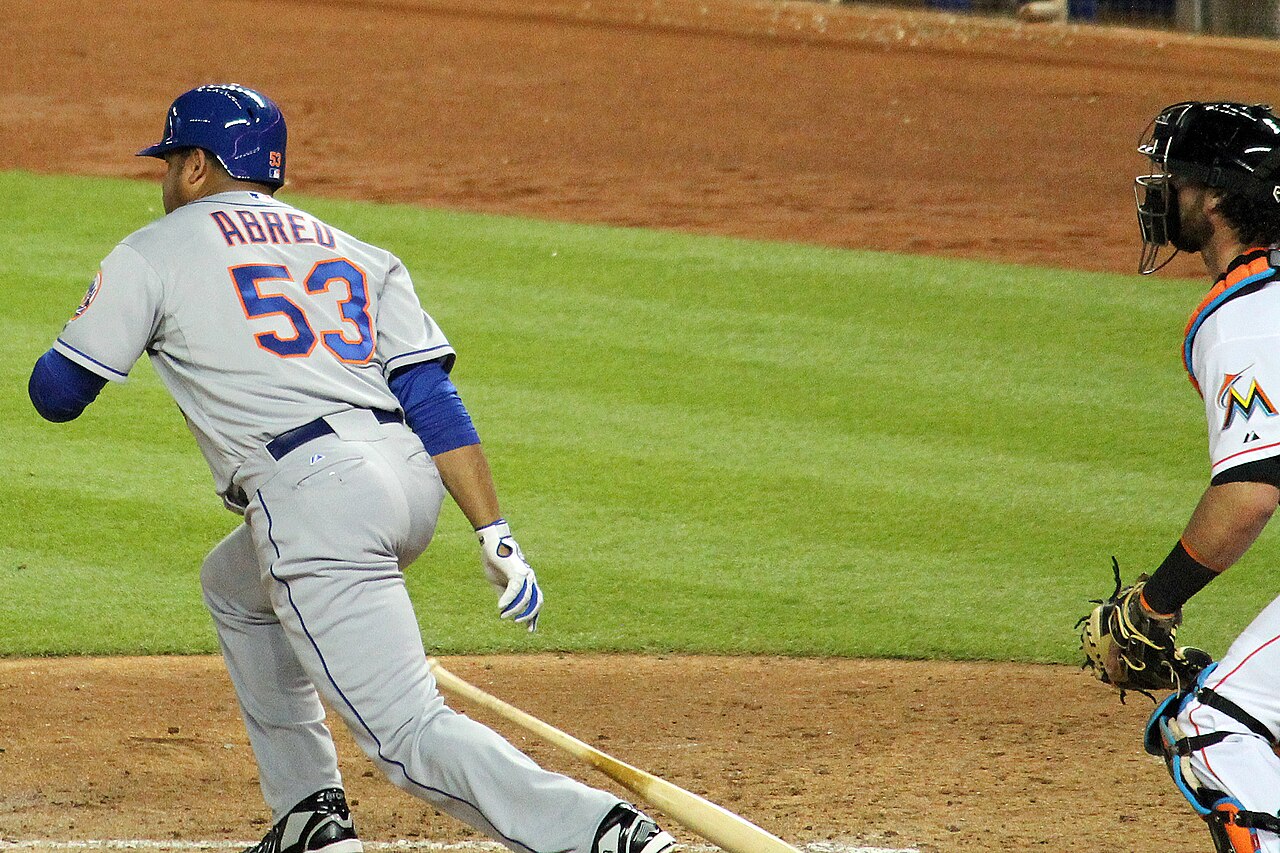
This is a somewhat sad moment. We are nearing the end of our look at position players as we get to the last one on the diamond. To be sure, debating pitchers is fun, but in many ways they are more difficult to profile than hitters and that is the main reason why I have been putting it off for so long. Right field obviously has different connotations depending on what age you are talking about.
In Little League, I was stashed in right field until I was able to figure things out enough to go to center. As Peter, Paul, and Mary said, “cause I’m here in right field just watching the dandelions grow.” Somewhere along the way, that shifts and right field becomes a more challenging defensive position. It isn’t like shortstop, second base, or catcher. Heck, it’s not like center field, but the skill set required is more comprehensive than left field.
This is where I remind our new readers about a couple of our ground rules. First, I only compare players with players from their own position. As we will see when we get to total runs, some positions are considered to be more valuable than others when compared with the whole baseball universe. Secondly, no single test qualifies or disqualifies a player. As we will see, each test can produce different results and we have already gone through this once already. These three tests are additional tests. We are looking for a preponderance of the evidence.
RF WAR Seasons
| 5 WAR | 4 WAR | 3 WAR | Total | |
|---|---|---|---|---|
| Dwight Evans | 3 | 4 | 6 | 13 |
| Bobby Bonds | 7 | 3 | 1 | 11 |
| Reggie Smith | 5 | 5 | 1 | 11 |
| Bobby Abreu | 7 | 0 | 3 | 10 |
| Brian Giles | 4 | 3 | 3 | 10 |
How one looks at this data tells us a lot about what they think and what they value. If you like consistency and productivity then Evans is clearly head and shoulders above the rest. However, most of those seasons were the three and four win variety. Those are good and solid seasons, but they are not the kind of top end seasons that capture the imagination.
Bonds and Abreu have the top end seasons (seven each) but they didn’t have as many solidly productive seasons. If you read the initial look at right field you know this is the peak value portion of the proceedings. Some people still value career value more and they aren’t necessarily wrong.
Value is often in the eye of the beholder. I tend to prefer top end performance because those are the seasons that get burned into everyone’s memory. They are the seasons that often help lead teams to titles. Still, some fans would love a guy that gets them four wins every year for 15 years. Obviously, any one of us would love to have any of these guys patrolling right field for our teams. Yankees fans might be the only exception to that rule.
RF ROV and BPO
| AVG | SEC | ROV | BPO | |
|---|---|---|---|---|
| Brian Giles | 0.291 | 0.403 | 0.347 | 0.942 |
| Bobby Abreu | 0.291 | 0.390 | 0.341 | 0.928 |
| Bobby Bonds | 0.268 | 0.374 | 0.319 | 0.861 |
| Reggie Smith | 0.287 | 0.336 | 0.312 | 0.842 |
| Dwight Evans | 0.272 | 0.355 | 0.314 | 0.826 |
When Theo Epstein was running the Red Sox, they adapted a popular song to match his general philosophy. The hook went, “I’m down with OBP (yeah you know me), I’m down with OBP (yeah you know me).” It was an obvious play on OPP. This isn’t to say that players with higher SEC and lower batting averages are better players. This is more of a demonstration on who the BBWAA tends to overlook.
Critics of these numbers will correctly point out that Giles and Abreu played in a more prolific offensive era. They will get no argument from me. It is interesting that Bonds, Smith, and Evans were contemporaries and their numbers are all fairly close. ROV is designed to be interpreted like batting average. BPO measures mostly the same thing with some notable differences. They are scaled differently but are more or less similar. Historically, an average BPO would fluctuate between .650 and .700 depending on the era.
Obviously, ROV and BPO are not normed the same way than OPS+ or wRC+ is. These numbers do not replace those numbers. It is meant to add more evidence and not replace evidence. These are only two additional tests, but I think we are seeing one name repeated from the first additional test. Abreu was drastically undervalued during his playing career because he never put up historically gaudy numbers. He was just really good for a good number of years.
Total runs does not replace WAR, but it does give it some additional context. There are those that do not subscribe to WAR and their objections are noted and certainly make sense. This is why the other tests exist in the first place. We want to look at each player in as many different angles as possible.
RF Total Runs
| RC | Rfield | Rbaser | RPos | TR | |
|---|---|---|---|---|---|
| Bobby Abreu | 1,708 | −7 | 16 | −95 | 1,626 |
| Dwight Evans | 1,612 | 67 | 3 | −113 | 1,569 |
| Brian Giles | 1,385 | −28 | 21 | −56 | 1,322 |
| Reggie Smith | 1,276 | 77 | 11 | −46 | 1,318 |
| Bobby Bonds | 1,226 | 47 | 37 | −71 | 1,239 |
Total runs are a Bill James stat designed to look at the total contributions of a player. The position adjustment (Rpos) was done to compare players from different positions. These were all right fielders, but some of them played some center or left field. Others served as designated hitters at times. So, that directly impacts their comparative value with other players.
One of the more fascinating aspects of total runs is what I would label as the push and pull factors. Runs created obviously builds over time. You do not have negative run created unless you only grounded into double plays. So, the longer a player plays the more runs he will create. However, the Rfield and RBaser categories (fielding and base running) are compared with average, so it is highly likely that an aging player will lose ground there. Obviously, an aging player might also DH more often and lose value that way as well.
On balance, a healthy player will usually create more runs than they will lose in fielding and base running. So, when we see a gap like we see with Abreu and Evans (as compared to everyone else) then we have to stand up and take notice. I would dare say that the two have shown themselves to be head and shoulders above the other three when we consider all of the tests in concert.
Next time, we will compare them with most of the rank and file Hall of Fame right fielders. It becomes a glorified if…then statement. If these two are similar to those Hall of Famers then they probably should be Hall of Famers. If they come up short then they will just have to stand as the best right fielders not in the Hall of Fame.
Originally published in Thoughts from A Native Texan on April 12, 2026. Feature photo by Jeffrey Hayes. Creative Commons License.

































.jpg)